Platinum property prices

Platinum property prices

As the nation prepares to celebrate the Queen's Platinum Jubilee, we’ve looked back at changes in the housing market during the reign of Queen Elizabeth II.

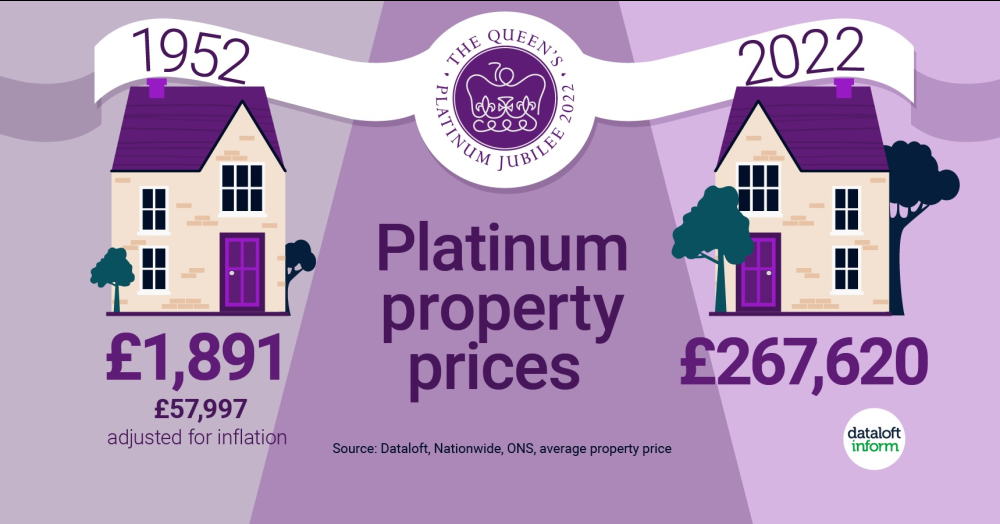
In 1952, the average price of a home was just £1,891. Adjusting for inflation that would be £57,997 today. At £267,620, the current average price of a home is over four times that figure.

Back in the 1950s, over two-thirds of households were renters; today close to two-thirds of households are owner-occupiers.

Like today, there was a housing shortage. But the 1950s was an era of rapid housebuilding, as part of the post-war reconstruction.

For those seeking to buy, the average price of property in 1952 equated to 4x average annual earnings, compared to over 8x today. Source: Dataloft, Nationwide, ONS


Get our Newsletter

Rental demand remains resilient in early 2026, but growth has moderated. For landlords, spring is less about reacting and more about refining strategy.

If you are thinking about moving in the next 6 to 12 months, a market appraisal is often the best first step. It gives you a clearer view of value, timing and buyer demand, helping you plan with more confidence in a competitive 2026 market.

New research from specialist lender Pepper Money suggests that around 220,000 privately rented homes will be sold out of the rental sector by the end of 2026. That's a significant number, and if you're a landlord weighing your options, you're far from alone in doing so. Understanding what's driving this trend, and what it means for those who stay.

April is a good time for buyers to focus on readiness rather than guesswork. In a market where choice has improved but confidence remains mixed, being organised can make all the difference when the right home comes along.