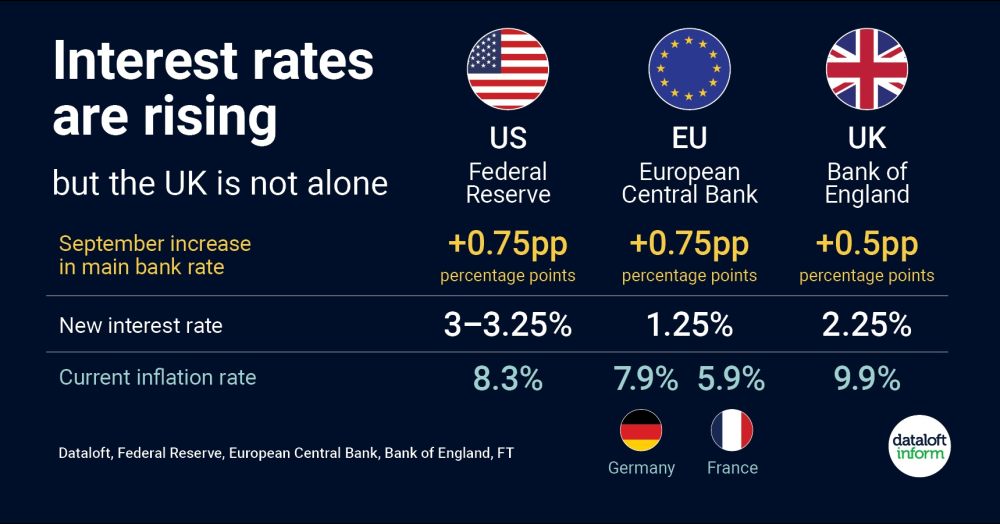
Interest rates are rising, but we're not alone

Interest rates are rising, but we're not alone

In the September meeting, the Bank of England increased its bank rate to 2.25%. Its seventh consecutive rise and again increasing the rate by a significant amount (+0.5 percentage points).

Many UK borrowers are protected from any immediate increase by fixed rates (representing 94% of new mortgages*) but borrowing costs are rising for many existing and all new borrowers.

The Bank of England needed to take decisive action to ensure high inflation doesn’t become entrenched. The UK is certainly not alone in this; the Federal Reserve in the US also increased rates significantly this month, so too the
European Central Bank.

Consensus forecasts, compiled by HM Treasury, suggest that UK inflation could be back to more normal levels for 2023 at 4.5%. Source: Dataloft, Financial Conduct Authority, Q1 2022 data, Federal Reserve, European Central Bank, Bank of England, FT


Get our Newsletter

If you are thinking about moving in the next 6 to 12 months, a market appraisal is often the best first step. It gives you a clearer view of value, timing and buyer demand, helping you plan with more confidence in a competitive 2026 market.

March has been a month of genuine contrasts in the property market. Asking prices have edged up, buyer activity has held relatively firm, and the spring selling season has arrived broadly on cue, yet there's an undercurrent of uncertainty that anyone thinking about moving needs to be aware of.

April is the final window for landlords in England to prepare for the first phase of the Renters’ Rights Act. With the new tenancy regime starting on 1 May 2026, now is the time to review paperwork, processes and whether self-management still feels realistic.

After a subdued end to 2025, the first quarter of 2026 has quietly rebuilt confidence in the housing market. March may be the strategic launch point sellers have been waiting for.